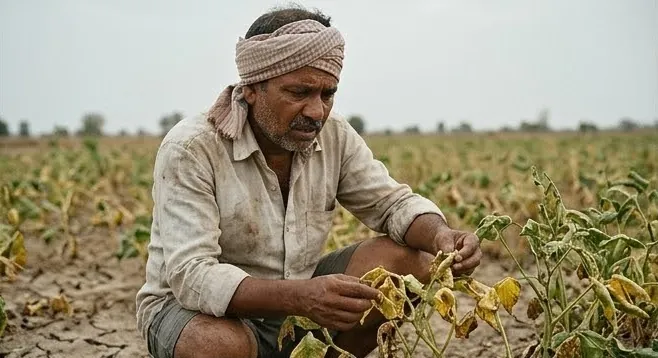
01 · The setback
A crop lost
A dry spell and pests wipe out most of the season.
A practical playbook to turn family land, or leased land, into a self-reliant organic farm business. The hybrid plan, crop choices, drones, returns per acre, buyers, export and government support, in plain language. Keep your job while you build.
Watch the 30-second film · full 2-minute version
An illustrative story that the playbook turns into steps you can follow.
A dry spell and pests wipe out most of the season.
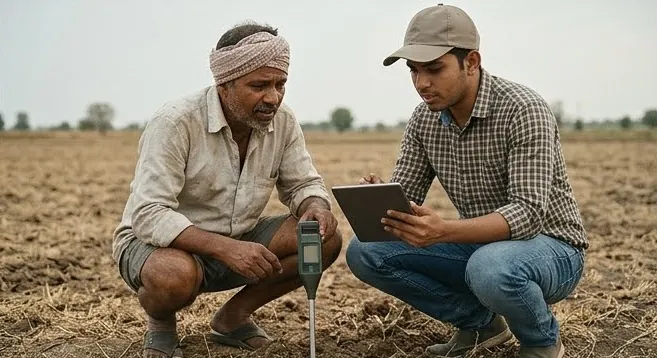
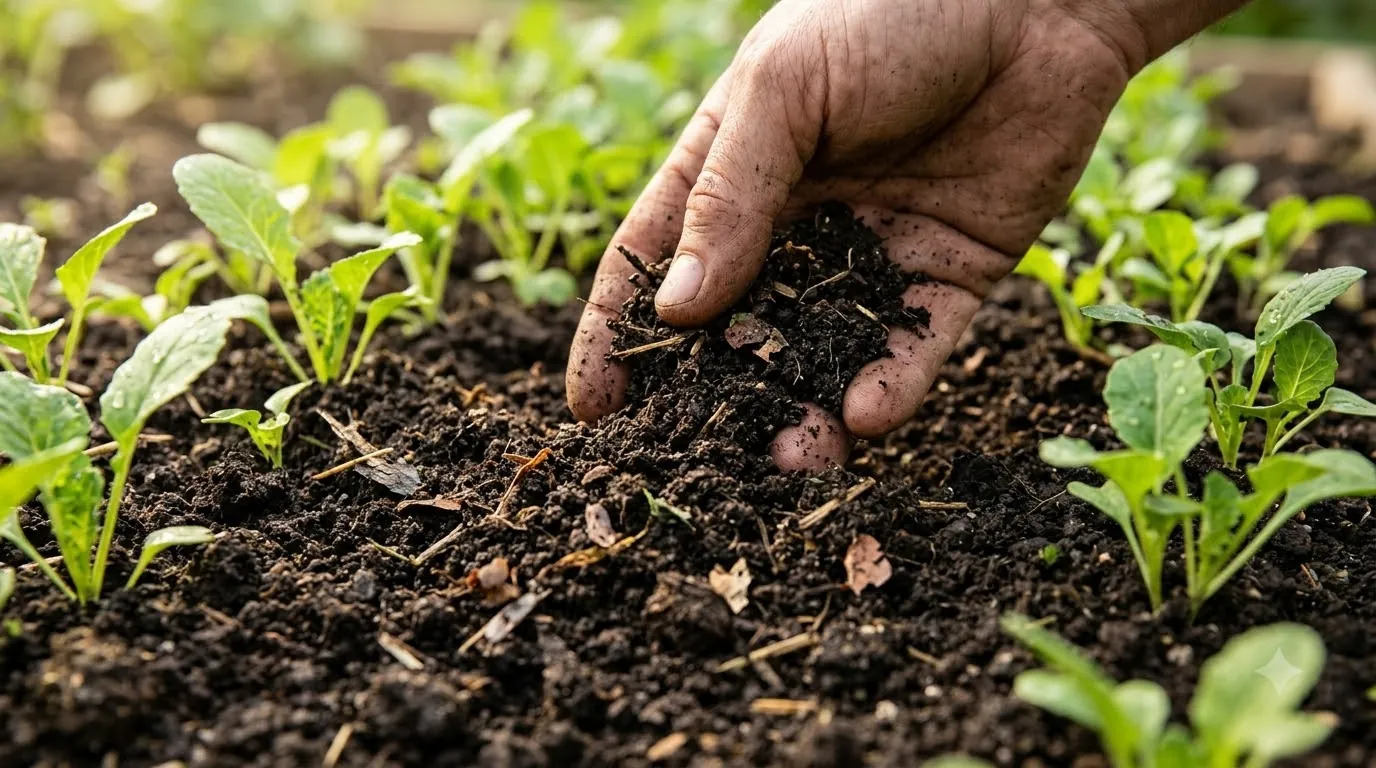
Test soil and water, pick the right crops, convert 30% first.
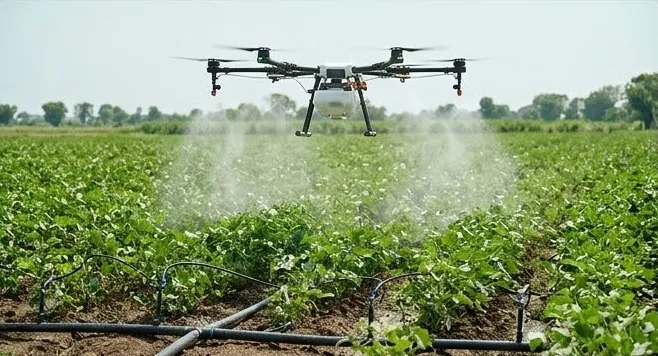
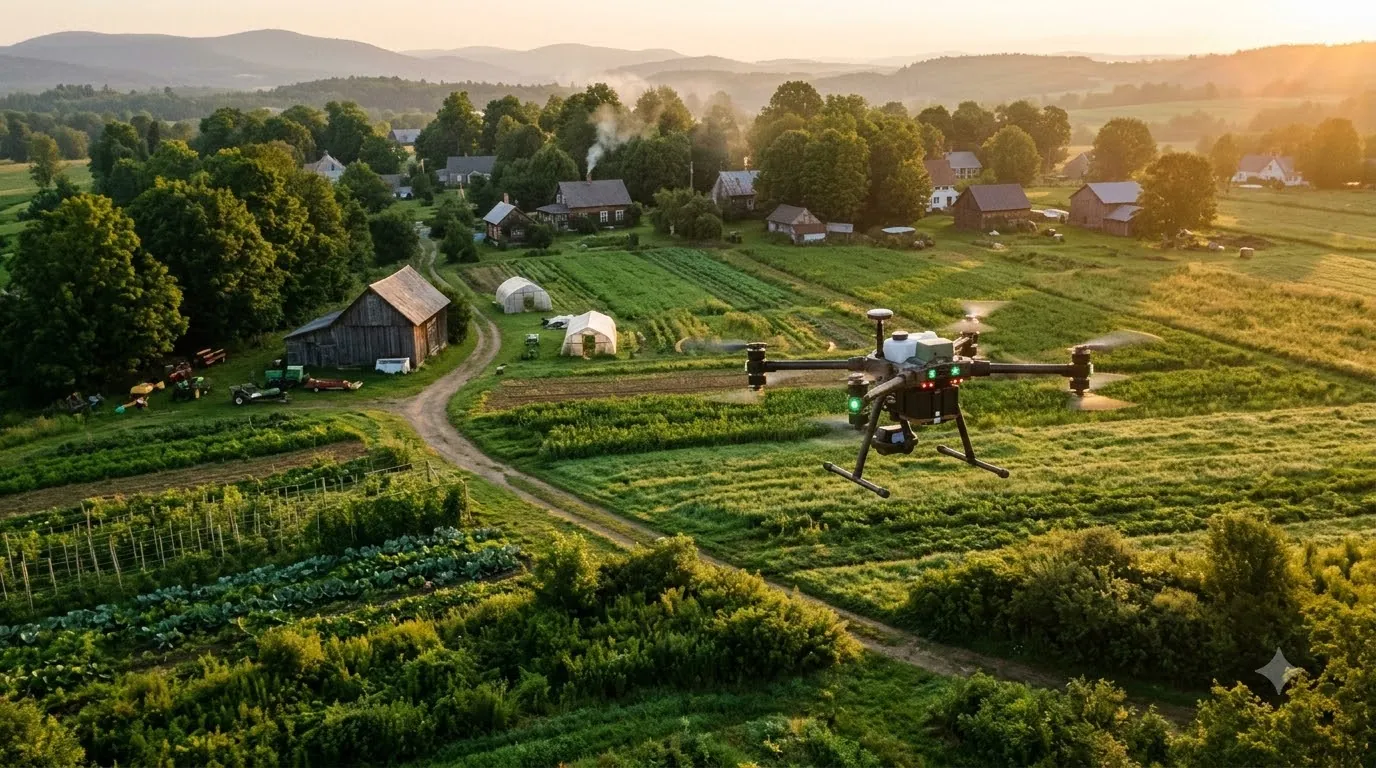
Drone spraying as a service, drip lines to save water.
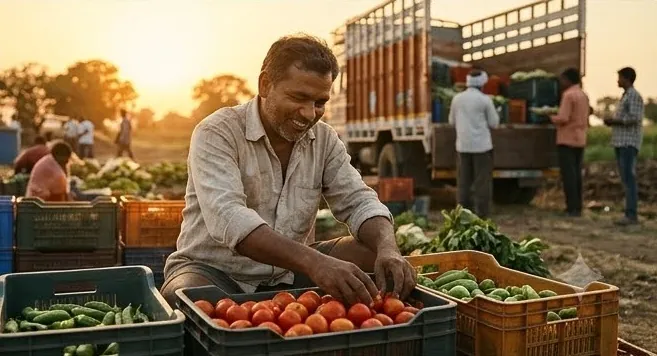
Buyers lined up before harvest, at a better price.
Tap a region to see its rainfall, soil, rivers, best organic crops and natural advantage. Switch to the rainfall view, or show rivers, cities and the big crop markets.
Regions and rainfall bands are simplified by region for planning; river courses are schematic. State outlines: svg-maps (CC BY 4.0). Not an official boundary map.
Turmeric and chilli bring high value per acre. Maize and jowar give steady, low-risk income and fodder. The playbook profiles each one, then combines them in a simple 5-acre plan.
The value-addition crop
High reward, high attention
The steady earner
The drought insurance
Yields often dip 10–20% while soil recovers from chemicals. Convert about 30% first, let the rest of the farm fund the switch, and scale once your soil and buyers are ready.
Soil and water test, join a PGS group, build compost, line up a drone service.
About 30% organic: high-value crops and your first 30–50 direct customers.
60–100% organic, certified, with one value-added product such as turmeric powder.
Bars show the share of land under organic farming in each phase, for a 5-acre farm.
Pick a crop and sales channel, set your acres, and see what the playbook's figures suggest. Then plan on the cautious number.
Item-by-item costs for each crop, the 36-month hybrid budget, five ways to sell and a returns calculator you can edit. Reserve your copy at ₹599 and get the free starter chapter first.
ICAR trials on sugarcane found drone spraying used 89% less water than manual spraying. The playbook runs the numbers on four ways to use a drone.
No capital. Roughly ₹16,000–28,000 a year saved on 5 acres.
₹3–8 lakh per drone, 40–50% subsidy. Payback of 10+ years.
Nets about ₹300–370 per acre sprayed; breaks even near 1,200 acres.
Namo Drone Didi: 80% of the drone package, up to ₹8 lakh.
One of the main destinations for Indian organic food.
India's NPOP organic certificate is accepted as equivalent in the EU.
A major and nearby market for Indian organic food.
The playbook explains each scheme, who qualifies and where to apply, with checklists. Amounts change, so it also shows where to confirm them.
A beloved screen hero spent his final years on his 100-acre farm in the hills, growing fruit, vegetables and grains organically.
A National Award-winning actor farmed wheat and paddy near Pune and shared the farm's earnings with his workers. Friends called him a farmer first.
In a study of 170 cotton fields in central India, organic farmers matched yields, halved input costs and earned 30–40% higher margins.
One-time payment · instant download
Yes. The playbook covers leasing, partnering with a landowner and joining farmer groups, with the checks to make before you sign anything.
No. The hybrid plan is built for weekend farmers with a local partner. Leave your job only when the farm's numbers say so.
No. Returns depend on your soil, water, prices and management, and scheme amounts change. The playbook shows cautious figures and where to confirm current ones.
The English edition comes first; a Hindi edition is in progress.